SHA(i)PES of the FUTURE
Oxford Brookes University
9-12 September 2026
Welcome to the 18th Annual Conference of the Screenwriting Research Network!
Here you can find all the information you need about the Conference. Click on any item and/or sub-item on the page to expand it.
The 18th annual International Conference of the Screenwriting Research Network (SRN 2026) will be hosted by Oxford Brookes University in the UK, on Wednesday 9th through Saturday 12th September 2026. The Conference is organised with the support of the School of Arts and CoRA (Centre of Research in the Arts) of Oxford Brookes University. The main locations of the Conference will be at the Headington Campus.
- Conference theme

It’s a brave new world out there and, therefore, one obvious approach could look at representations of the future in screenplays ranging from science-fiction to utopian/dystopian and other speculative genres including, but not limited to, the recent comeback of time-travel stories, particularly in serial dramas.
Or…
Those of you who attended the 2019 conference in Porto will remember a fascinating keynote on future narratives and its application of game theory that echoed Borges’ view of the future as a “garden of forking paths”. And while wedding gardening with screenwriting might be pushing it a bit too far, besides and/or regardless of sci-fi tropes, the uses of time in/as key screen narrative devices that rely on future-oriented expectations can be explored through the still vastly uncharted territory of scenario planning and world-building – to cite but two options.
Or…
Paraphrasing a well-known philosopher, our thoughts might well be perpetually occupied with (a well-known poet would say monopolized by) the past and the future but, as researchers, we tend to focus on the past – for good reasons. Still, from a historiographic perspective one always looks at the past in order to better define the future. For that, papers that investigate either key turning points and major twists in the plot or weak signals of broader paradigm shifts in the history of screenwriting that paved the way to future developments of the craft and its practices are of course most welcome.
And now… to the elephant in the room.
Is AI the future of screenwriting? Will AI replace screenwriting? Will AI benefit or harm screenwriters? What will be the practical, professional and legal implications? And if AI will indeed change screenwriting, what models (e.g. LLMs) are bringing about this revolution? Will they alter the very ontology of screenwriting and of the screenplay itself? Will AI turn screenwriting into a form of prompt engineering? Most importantly… will you present a paper about AI and screenwriting?
If so, aside from the daily newsfeed hype diet we have gotten used to in the past few years as opposed to the doom-and-gloom collapse scenario à la “tomorrow is already late”, consider researching and presenting foresight into a transformation scenario à la “images of the future”. Yes, we will zoom in to the future, but what will make your paper stand out is how it reveals its possible SHAPES. Which is less about predicting one probable future than it is about exploring the causes of change and plural alternatives beyond dominant views.
And finally…
SRN 2026 will mark the 20th anniversary of the Network!
We have come a long way in ways that perhaps few would have expected two decades ago. What is the future of the SRN and of screenwriting research? Will we need a more holistic approach? The SRN is transdisciplinary by its own nature: does it need to reach even farther out to other, thus far less familiar domains? Do we need to adopt new or less frequented methodologies – e.g. scenario method, backcasting, cross-impact analysis, social network analysis etc.? How and how much will our traditional pedagogical and research practices be impacted? Will we be SHAPE (Social sciences, Humanities and the Arts for People and the Economy), STEEP (Social, Technological, Economic, Environmental and Political) or… alas!, STEM?
- Call for Papers
You can download the full original Call for Papers HERE.
- LETTERS OF ACCEPTANCE
Should you need a formal letter of acceptance on Oxford Brookes letterhead for the purposes of securing a visa or funding, simply drop a line to paolo.russo@brookes.ac.uk with your full name (as it appears on your passport), affiliation and what you need it for.
At SRN2026 we’ll try a different “shape” for keynotes. Rather than the usual address or speech, we will have “fireplace conversations” with both speakers. Speaking of which, we are very honoured indeed and excited to announce…
KEYNOTE SPEAKER 1 – THURSDAY 10 SEPTEMBER, 9.30 am

GRAHAM LOVELACE
Graham Lovelace, Editor & Publisher, Charting Gen AI, and Convenor, the Creators Emergency Summit
Graham Lovelace is an award-winning journalist and senior editor whose career has been spent in the intersection of media and technology. Today he’s a leading strategist and writer on the impacts of generative AI on human-made media, the ethics and behaviour of the AI companies, the future of copyright in the AI era, and the evolving AI policy landscape.
Graham has been a journalist, editor, consultant, producer and entrepreneur with a keen interest in the future of media. He was a member of the team that launched Teletext Limited in the UK, becoming editor-in-chief of the biggest and commercially most successful information service of its kind in the world. He’s worked as a journalist at the BBC, Visnews, BSB News, ITN, Channel 4 and the Press Association, and is a graduate of Harvard Business School’s Advanced Management Program.
Graham is now applying his extensive media experience to explaining the opportunities and risks present in the highly disruptive age of generative AI. He shares his research in Charting Gen AI, a highly acclaimed global newsletter that keeps subscribers in over 120 countries informed on developments. He is also the convenor of the Creators Emergency Summit, the event that focuses on the plight of individual creators and provides practical advice against AI exploitation.
Contact: graham@lovelace.co.uk
Charting Gen AI: https://grahamlovelace.substack.com
LinkedIn: https://www.linkedin.com/in/grahamlovelace
Website: https://lovelace.co.uk
KEYNOTE SPEAKER 2 – FRIDAY 11 SEPTEMBER, 1.45 pm

GUY GADNEY
Guy Gadney has been producing drama and entertainment with AI for over 15 years. An Emmy and BAFTA recognised creative technology expert, he has produced over 100 productions including Sherlock: The Network with Benedict Cumberbatch, Bulletproof Interactive for Sky TV, and GTST transmedia for RTL Nederland.
He founded Charismatic in 2024 with design partners Channel 4 and Aardman Animations with £1.04m investment from Innovate UK to build the platform for the future of the entertainment industry. Charismatic has already worked with Hollywood studios, Ubisoft, ITV Studios, TIP Image films and numerous brands, and is the most recognised AI Studio in the UK.
Guy has advised the UK Government on Creative AI, and was called as a witness to the House of Lords on AI, Copyright and the Creative Industries. He has written two books on AI Filmmaking, and is on the Board of Sheffield DocFest and Oxford’s Story Museum.
TABLE READS – WEDNESDAY 9 SEPTEMBER, 3.30 pm and SATURDAY 12 September, 1.45 pm


ROLAND MOORE
Roland Moore is an award-winning series creator, showrunner, scriptwriter, script editor and consultant.
He created the BBC1 returning award-winning period drama series LAND GIRLS and was the Showrunner on HUMANS for Endemol Shine China and Croton Media. He has written for DOCTOR WHO, SURVIVORS, STAR COPS, TORCHWOOD. Most recently, Roland was the lead writer of FALLEN – the adaptation of the best-selling book by Lauren Kate – for which he won an International Emmy Award.
Roland will join us via Zoom to provide instant notes to the script writers who will present their work at the SRN2026 Table Reads on Wednesday 9 and Saturday 12 September.
Website: https://www.rolandmoore.tv/
FORMAT
- If this is your first time attending the/a conference and feel a bit anxious; or if you simply want to dive right into it and start meeting familiar and/or new faces, we are planning a pre-conference meet & greet on Wednesday 9 in the early afternoon, so you can break the ice, familiarise with our campus and start feeling at home.
- On Wednesday 9 (at 5.30 pm) we will welcome everyone with a Wine reception in the historic Headington Hall’s music room.
- SRN2026 will be bookended by two Table Read sessions: i.e. the conference opener on Wednesday 9 and the closing session on Saturday 12. Emmy-winner screenwriter Roland Moore will give notes to our delegates at the table reads.
- We have Screenings (one short film and one feature film by SRN members) to close Thursday 10.
- Our usual AGM is on Friday 11, packed full with events: i.e. the EC elections, the SRN Awards for publications and teaching innovation, various announcements… and a big surprise – don’t miss it!
- There is one session for Working Groups on Thursday 10, although they (and everyone else who need a space to meet up, talk and/or relax) will have two rooms available (i.e. JHB 301 and 302) throughout (almost) the whole conference.
- Two fabulous Keynote speakers will focus on GenAI: Graham Lovelace on Thursday 10 and Guy Gadney on Friday 11. See section above for their bios.
- And of course, lots of Papers and three Workshops too (see more details below under STREAMS and PROGRAMME). Papers are slotted in 90-minute panels of three papers each. Make sure to prepare so that your presentation does not exceed 20 minutes in duration (more details in First-Timers (and not) below). This will allow all presenters to deliver their papers effectively and will leave plenty of time for Q&As.
- We have planned regular Breaks: mid-morning and mid-afternoon (although Saturday only in the morning) for tea/coffee/juice/water/pastries – hot and cold beverages will remain available throughout the day; lunch will be served on Thursday/Friday/Saturday (see EATING below for more details).
- Of course, we will enjoy the traditional Conference Dinner on Friday 11 (see EATING below for more details; go to REGISTER to sign up). Note: whilst registering for the conference is required, the dinner is optional.
Here below you can see the “shape” of SRN2026; you can also download the Conference format as a PDF file HERE.

STREAMS (panel sessions)
This year we will have around 100 presentations in 30 panels spread across eight sessions from Thursday to Saturday. Of course, we have tried to group papers in thematically consistent panels: however, in devising the schedule we have prioritised delegates’ availability when necessary. That said, the structure (or should we say SHA(i)PE) of SRN2026 comprises 4 thematic/methodological/contextual streams:
- STREAM 1: Research & Pedagogical accounts (in room JHB 303)
- STREAM 2: Social & Historical perspectives (in room JHB 304)
- STREAM 3: Future & Craft (in room JHB 306)
- STREAM 4: AI & Technology (in room JHB 308-Kennedy)
It goes without saying that many papers would sit well in more than one stream. You can view the Streams layout here below or also download it as a PDF file HERE.

SCHEDULE (Full and One-pager)
You can view the schedule as a flipbook by clicking below and displaying the book full screen. Or, if you prefer, you can download the Conference schedule as a PDF file HERE. On a mobile phone, you may want to scan the QR code below.
NOTE – While indicative, slots may still change.

The schedule is also available as a handy one-pager (okay, it’s two sides but, technically, still one page) that includes times, rooms and names only. Here is the downloadable PDF.
BOOK OF ABSTRACTS
You can view all the abstracts online as a flipbook by clicking below and displaying the book full screen. Titles/entries are not linked in the Table of Contents but you can easily jump to individual papers/workshops/screenings/table reads by using the Search option/button (i.e. the one with the magnifying lens) and typing the author’s name or title (if you know it). Or, if you prefer, you can download the Book of Abstracts as a PDF file HERE. On a mobile phone, you may want to scan the QR code below.

CHAIRS
Panel Chairs can check their allocated Panels in both the Schedule and the Book of Abstracts above. Simple guidelines for chairing panels can be downloaded HERE as a PDF file. The most important thing to keep in mind when chairing a panel is time-keeping. Everything will be just fine.
- EXECUTIVE COUNCIL ELECTIONS: three new members will be elected to fill the expected vacancies and will serve for two academic years. The deadline for nominations was 14 August 2026. HERE you will find all the details of the process. You can get a sense of what the roles on the Executive Council entail by checking out the current EC on the SRN website. Please make sure to attend the AGM as it is your chance to actively take part in discussions about all that concerns the SRN and to VOTE!
- SRN PUBLICATION AWARDS: currently in its 7th edition, the winners of the two categories (i.e. Best Monograph and Best Article/Book chapter) will be announced during the AGM. The judges are our esteemed colleagues Carmen Sofia Brenes, Leslie Kreiner Wilson, Garrabost Jayalakshmi and Margaret McVeigh. You can find further details in the Call for nominations HERE.
- SRN TEACHING INNOVATION AWARD: the winner(s) of this award too will be announced during the AGM. The SRN Teaching Innovation Award recognises the achievements of outstanding faculty scholars from around the globe whose work demonstrates original approaches to supporting the teaching and learning development of screenwriters and scholars of screenwriting. The judges are our esteemed colleagues Armando Fumagalli (Catholic University of Milan), Lucian Georgescu (UNATC Bucharest), and Anna Weinstein (Kennesaw State University). You can find further details in the Call for nominations HERE.
- PUBLICATIONS AND OTHER ANNOUNCEMENTS – We will be announcing two new working groups and an ambitious projects. Moreover, the organisers of SRN2027 will be in attendance presenting next year’s conference. And we have a surprise announcement too… to keep you glued to the edge of your seats!
- PHOTOSHOOT – Finally, before heading off to the conference dinner we’ll take a photo of the 100+ delegates all together in the Main Lecture Theatre to share afterwards.
The conference will take place at Oxford Brookes University’s main campus (aka Headington Campus) in the Headington area of Oxford – we will be using facilities in three buildings (two on Wednesday 9 and and a third one on Thursday through to Saturday). You can find much more detailed information here below.
CAMPUS
SRN 2026 will take place at the Headington Campus, which consists of two nearby sites: Gipsy Lane (or Main site) and Headington Hill. We will use both. More specifically, we’ll reside at the Headington Hill site (look for buildings NHHB and HHH on map below – also downloadable as a PDF here) on Wednesday 9 September and at the Main site (building JHB on map) from Thursday 10 to Saturday 12 September. The two sites are just two minutes away from each other on foot.
NOTE: everyone calls it the Main site to avoid confusion as the main entrance is on Headington Road but there is also a side entrance on the adjacent Gipsy Lane. If you call a taxi, make sure they get to the right entrance.

FACILITIES (session rooms)
WEDNESDAY 9 (NHHB and HHH)

We will welcome everyone in NHHB (aka the Teaching Building): meet-and-greet, check-in/registration, and the conference opener (i.e. Table Read 1) will be in here.

The first table read session will be in room G05 (aka Digital Theatre). Guest writer Roland Moore – as well as all the actors/readers – will join us via Zoom.

We will then move to the Headington Hall (HHH) for an informal wine reception. Whether permitting we will be able to lounge outside on the beautiful Hall ground.
THURSDAY 10 to SATURDAY 12 (JHB)

This is the piazza just outside JHB (our venue for the remainder of the conference).

On entering JHB, walk past the reception desk and up the stairs to the foyer of the Main Lecture Theatre. The check-in/registration/info desk will be open from around 8 am. Our official Opening session will start at 9, introducing our first keynote speaker at 9.30.

All plenary sessions (i.e. keynotes, AGM, screenings) will be held in the Main Lecture Theatre which has a capacity of 320.

We then move to the third floor of JHB, where all the panel rooms are located. The check-in/info desk will now move to room 305 where delegates can also leave their jackets and bags if needed (Note: the room will be manned at all times and therefore safe but you are still responsible for your belongings – please, do not leave anything valuable there or anywhere else). Room 307 will be used for all tea/coffee breaks. Rooms 301 and 302 will be used to serve lunch on Thursday 10 and as meeting/quiet rooms thereafter.

Panel rooms 303, 304 and 306 are all very similar in size, capacity (40-50) and layout. These rooms will host Streams 1, 2 and 3 respectively.

Room 308 (aka Kennedy) is a bit bigger (sits 90-100) and is tiered. It will host Stream 4 panels and our closing sessions.

Lunch on Friday 11 and Saturday 12 will be served in The Terrace canteen, on the ground floor of JHB.
Click on the video here on the right for a walkthrough of the JHB building spaces (Note: the reception area will be on the foyer up the first set of stairs to the Main Lecture Theatre)
AV & TECH
Session rooms are available from early in the morning. We invite all presenters to test their visual aids well in advance.
ROOM PC
If using the PC in your allocated room, make sure to download a copy of your presentation file on its desktop (using a good old USB stick) or to upload it to the PRESENTATIONS folder shared on Google Drive as soon as ready. The Floor manager of your allocated room will then be able to download it for you.

Control pad in panel rooms
YOUR OWN LAPTOP/MACBOOK
If using your own laptop, you can plug it in using the HDMI cable available in each room. If your visual aid includes audio, make sure to select the Ektron output that will appear in your computer’s Sound settings.

HDMI, USB-A and USB-C connections available in every room
If you use Mac, you will likely need a USB-C/HDMI adaptor. You will have to bring your own (make sure it has video output capability).
Remote controls are available in all panel rooms, in case you need them. Unfortunately, lecterns are not available; only standing desks.
CAFES AND SHOPS
Wednesday 9 – The café on the ground floor of the Teaching Building (NHHB) will stay open until 3.30 pm – i.e. until the conference opener. A vending machine (dispensing rather dubious super-sugary products is available on the first floor); and at 5.30 pm we’ll have of course the welcome reception in the building next door (HHH, Headington Hall).
Thursday 10 to Saturday 12 – Two cafes are available in JHB – i.e. the main venue for the rest of the conference. One in the Forum area on the lower ground floor; another one (The Deli) on the same floor at the very back. Another café is located in the Clerici building (across the central courtyard from JHB).

The Forum and café area on the lower ground level of JHB, with access to the Zen garden in the central courtyard.
The Deli café at the back of the lower ground floor.

Under the colonnade in the piazza just outside the JHB building, you can find a Co-op store, selling groceries pretty much all day long.
TOILETS
Female, male and gender-neutral/inclusive toilets are available on the ground floors of both the NHHB venue (on Wednesday 9) and the JHB venue (Thursday 10-Saturday 12). Accessible toilets for delegates with both visible and not-visible disabilities are also available. Additional toilets are of course also available in the teaching wing of JHB, where presentation panel are scheduled, although each floor is allocated to individual genders.
ACCESSIBILITY (disabilities and assistance dogs)
All rooms used throughout the conference are easily accessible, even to delegates who might need a wheelchair. Activities on Wednesday 9 are all on the ground floor. From Thursday 10 to Saturday 12 we will ping-pong between panel rooms (which are all on the third floor of JHB) and the Main Lecture Theatre (which is on the first floor, just up the main reception). All floors are serviced by lifts. In case of fire, evac chairs are available along the fire escape routes. If you are unsure how to access specific areas of the campus, just ask any member of the organising committee or Lucy and Will at the Info Desk who will remain available throughout the conference.
Assistance dogs are welcome at Oxford Brookes University.
INFO FOR FEMALE DELEGATES
It’s uncommon but we’ve had one delegate with a small baby once. Unfortunately, we cannot provide child care facilities, but changing toilets are available on campus (and that goes for dad’s too, of course!). Breastfeeding is allowed and welcome on our campus; if you need a quiet space, rooms JHB 301 and JHB 302 should do the job most of the time; if busy, simply ask one of us or at the Info Desk.
In an emergency, free TOTM organic pads are available either outside the inclusive toilet on the ground floor of NHHB or inside the inclusive toilet on the ground floor of JHB. The Co-op store just outside JHB also stocks them.

COMING WITH FAMILY?
If you’re coming with your partners and/or young child(ren) we also have a Family Room on the lower ground floor of JHB, with some toys and colour books.

CHAPLAINCY AND QUIET ROOM
If you need some peace and quiet for yourself away from sessions and everything else, you can head to the Multifaith Chaplaincy. It does not matter who you are, where you come from, your gender, your religion (or lack thereof) or why you might want to use the space: all are welcome. You will need to reach the Garden Room, on the ground floor of the Buckley building, which is located round the Colonnade just outside of the JHB building.

WATER
Free water is available on campus 24/7. Bring your own re-usable bottle or cup and refill at one of the water fountains (on the first floor of NHHB, and on each floor of JHB) or at any of the cafes on campus.

SECURITY
Oxford Brookes University proudly remains an open campus and is generally very quiet and safe. Nevertheless, security services are available 24/7 and patrol buildings and grounds regularly. In an emergency, call +44 (01865) 603060 (you might want to save this number on your phone, just in case).
ANIMALS
Oxford Brookes’s campus is home to lots of squirrels, hedgehogs, soem badgers, a family of foxes and even a couple of deer. You’re welcome to take as many photos of them as you like but please do not feed them.

SRN veterans and seasoned conference-goers will forgive us but we cannot reiterate enough the importance of preparing your presentation adequately. The conference programme is a real jigsaw puzzle subject to butterfly effects of all sorts; that is why it is important to try and stick to times as best we can. We will give Chairs strict instructions to make sure we all do. That said, if you are less experienced or if this is your first time presenting at a conference, you might find the tips here below useful.
- It is called a “paper” for a reason. It is not a condensed lecture or an ad lib gig. Type it up and either print it out or read it from your computer screen when presenting.
- Rehearse and time your delivery. Do not rush it to cram as much as you can within the 20 minutes. Be selective in including what is really relevant, and be brutal in cutting out what is not. A paper is not a container of all the research you’ve conducted on the subject to squeeze in 20 minutes. Instead, pace it out by focusing on the main aspects: leave your colleagues wanting to know more about it. Consider that when delivering at the conference it will inevitably take you slightly longer than when rehearsing: plan to wrap up within 18-19 minutes, rather than 20. Time yourself when rehearsing and note down timings at the bottom of every page of your paper; if you start a chronometer app on your computer or phone when delivering, you can keep track and see if you are falling behind the expected timing. This way you will reduce the risk of being cut short by the Chair for exceeding your allocated time.
- If your paper is on the long-ish side, highlight paragraphs that – if needed – you can skip during your presentation without affecting significantly the overall meaning and impact of the paper. Remember that only you know they were supposed to be included: your audience won’t.
- You can of course use any kind of visual aide to accompany your presentation (or none at all, if you wish). If you use a slideshow (e.g. PowerPoint, Keynote, Slides, Canva, etc.), stick to the golden rule: a slide is not there to contain a word-for-word transcript of what you are saying. The more text and the smaller the font size in your slides, the more distracting it will be for your audience. A good visual aide includes headings and main pointers to map out your presentation.
- If you embed any clips within your visual aide, make sure to test it beforehand. Some apps won’t actually embed your clip files, but only link to it from where it is located on your hard drive. Also, clips eat up time from your presentation and tend to be the number one cause for technical issues, delays and nervous meltdowns in panels: in short, make sure they are really necessary and test them, test them, test them.
- Give a clear structure to your paper. A good, simple one: briefly introduce the topic and underpinning research (2-3 minutes); then outline the 3-5 main strands/arguments/findings in a logical sequence (3-5 minutes each). You can then elaborate further on some of these during the Q&A.
- Based on experience, we can tell you that up to 2,500 words your paper should be fine. If it is between 2,500 to 3,000 words, you should time it carefully. More than 3,000? You might end up in trouble.
- If you plan on using the PC in your allocated room, make sure to copy the presentation file(s) on its desktop early in the morning or, in any case, well in advance of your panel slot. Rooms will be open and available from 8 am. See more details about AV under VENUE above.
CONFERENCE DINNER (Registration, Menu, Pre-ordering and Dietary Requirements – NOW CLOSED)
Go to REGISTER to sign up for the conference dinner. We have booked Browns Brasserie in the city centre at 8 pm on FRIDAY 11 September. The £30 registration fee includes a sit-down three-course set menu consisting of Starter, Main and Dessert–but not drinks, which you will have to pay for individually (one option also has a surcharge of £10 that is not covered by the fee; and you will be able to order your own additional items if you wish to pay separately for them).
Here below you can see the dinner menu.

Once you have signed up for the dinner, to help speed up preparation and service, we invite everyone to pre-order their course options by clicking the button below. The link will open in a separate window. It is a template form, so please ignore the fixed price choice, which we have already agreed with the restaurant. Choose one option per course, then add your dietary requirements (if any) by clicking the button on the right. If you can’t find your requirements in the list, add them in the Notes field. And if you order for more than one person, specify that too. One you’re done, click on “Place order” to confirm. In the new screen, add your full name and email address, and confirm. You will not be charged again for this.
NOTE: the “Pre-order” button is also available on the REGISTER page. You only need to pre-order once, either here or there.
CATERING DURING CONFERENCE
As mentioned a bunch of times elsewhere, for the most part the conference registration fee covers the cost of catering during the conference. Therefore, we thought it is just right that you know well in advance what you pay for. Here below you can find the menus for catering throughout the whole conference, from Wednesday 9 through to Saturday 12 September. Just like on a film set, people need to be fed properly: therefore, we did our best to arrange a balanced menu–i.e. nutritionally varied, substantial but not too heavy–over the four days. You can view the catering menu as a flipbook by clicking below and displaying it full screen. Or, if you prefer, you can download it as a PDF file HERE. On a mobile phone, you may want to scan the QR code below.
NOTE – While indicative, options may still change.

DIETARY REQUIREMENTS FOR CATERING
To inform our caterer of your dietary requirements (again!), click on the button below. This one is for lunches served during the conference on Thursday 10, Friday 11 and Saturday 12. No need to choose options in advance this time round: you can check out the menu for each day in the CATERING DURING CONFERENCE section just above here. However, you certainly do want the caterer to know if you have any allergies, intolerances and the likes. It literally takes one minute to fill in and submit the form. The sooner, the better please.

SRN2026 is organised by the School of Arts at Oxford Brookes University, with the support of CoRA (Centre of Research in the Arts).
The organising committee consists of Paolo Russo, Smriti Singh, Maria Ball and Francesco Sticchi. Students Layla Newman and Lola Zivanovich are our content creators – be ready to be photographed during panels and, please, do subject yourselves to their much-anticipated 2-Question flash interviews during breaks. Students Will Sullivan and Lucy Darnell will help at the registration/info desk. Technical specialist Grace Thornley provides technical support.

PAOLO RUSSO is Senior Lecturer and Program Director, Media Arts & Photography at Oxford Brookes University. A former chairperson of the SRN, and co-editor (with Claus Tieber and Rosamund Davies) of The Palgrave Handbook of Screenwriting Studies (2023), he is also a professional screenwriter and a member of the WGGB.
SMRITI SINGH is the Research and Events Coordinator at the Centre of Research in the Arts at the School of Arts (CoRA), Oxford Brookes University. A documentary filmmaker with a professional background spanning journalism and international development, her work focuses on nuanced storytelling, community engagement, and visual culture. She recently submitted her PhD, which explores the lived experiences and subjectivities of Indian diasporic women in the UK.


MARIA de CARLI BALL is Student Ambassador Scheme Co-ordinator for the Marketing Recruitment & Engagement Directorate of Oxford Brookes University. She has recently completed her PhD and is also an Associate Lecturer on BA Film.
FRANCESCO STICCHI is Senior Lecturer in Film at Oxford Brookes University. His interests are in film philosophy, politics and precarity. Francesco’s latest monograph is titled The Politics of Monstrous Figures in Contemporary Cinema. Witches, Zombies, and Cyborgs Re-enchanting the Ends of the World (Amsterdam University Press 2025).

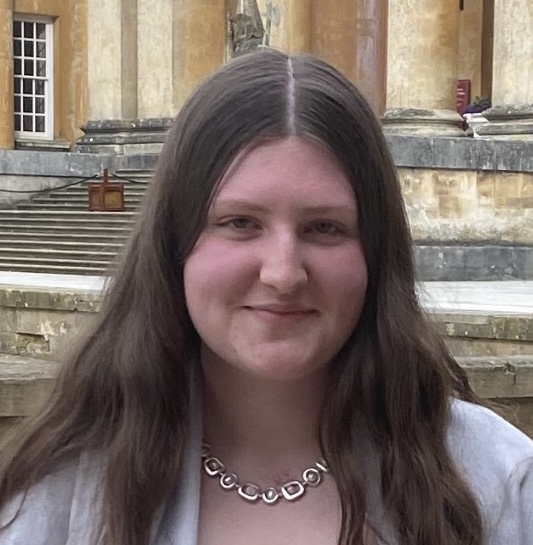
LAYLA NEWMAN is our content creator and producer. She is a third-year BA Film (Hons) student with a passion for social media content creation.
LOLA ZIVANOVICH is our cinematrographer. She too is a third-year BA Film (Hons) student with an interest for cinematography and enjoys the process of transforming written scripts to the screen.


LUCY DARNELL is a second-year BA Film (Hons) student. She will welcome everyone at the check-in/info desk throughout the conference.
WILL SULLIVAN will be at the info desk and will assist Layla and Lola while recording. Will is currently on his second year on BA Film (Hons). He has a deep passion for screenwriting and filmmaking!
